Pat Easterling 1934-2026
I learn with sadness of the death of Professor Pat Easterling (1934-2026). When I was a Classics student at Cambridge in 1973-1976, Pat Easterling’s lectures quickly became known as the best on offer, an ideal blend of analytical rigour and communicative flair. She also co-directed (with George “Dadie” Rylands) the 1974 Greek-speaking production of Euripides’s “Medea”, in which I, aged eighteen, played the aged tutor to Medea’s two ill-fated children - one of whom was played by Pat’s young son Tom.
Pat Easterling was born Patricia Fairfax. She was a Classics undergraduate at Newnham College, which became a haven for much of her subsequent career; during her undergraduate time, she met (Henry) John Easterling (1932-2021), who, having been an undergraduate at Trinity College, stayed most of his life at that college, where he became Senior Fellow, a leading tutor, and administrator. He went on to do much to support his wife’s more eminent Classics career.
Pat specialised in Greek tragedy: her editions of Sophocles have been of lasting importance. With Joyce Reynolds and Mary Beard, she did much to make Newnham a haven for Classics. Mary was my Classics undergraduate contemporary: I last met Pat at a party given in 2005 by Mary to celebrate her (Mary’s) fiftieth birthday and her (Mary’s) being made Professor of Classics. Pat had been made Regius Professor of Greek at Cambridge in 1995, the first woman - and still the only woman - of the many scholars to be given that position.
Mary has written: “I vividly remember the wise words of Pat, at a university meeting in the early 1990s when I was a young lecturer at Cambridge. Someone from the administration had asked the simple question: ‘What does Classics teach?’ I had no idea how to answer and feared that I would be called out. But Pat responded instantly. ‘It teaches you to read difficult things,’ she said. That has stuck with me ever since. Her point was that Classics was not only about great literature, the origins of western philosophy or theatre, or all the other things usually rolled out in its support.
“Students of Classics learned to struggle with language (and sometimes it was a struggle), with complexity and with things that were very hard to understand. Looking back, I now see that when she was teaching us Greek literature in her elegant room in Kennedy, she was also teaching us how to deal with that complexity and with how to confront the limits of our understanding. If we found, for example, reading the Greek historian Thucydides difficult (he can be close to incomprehensible), that was because he was trying to say difficult things. So how were we to face that?
“This did not make learning with her painful. I am thinking of my supervisions in the 1970s, when her teaching (accompanied by a cup of tea or – as then was the custom – a glass of sherry) felt like an oasis of humanity. It was indeed, reading and interpreting texts that took you out of your comfort zone, but you always knew that she was with you on that journey. We will miss her.”
There were then more renowned classicists who impressed us classics students less. With Pat Easterling, however, I and others knew our luck to have come into contact with her.
Friday 28 August
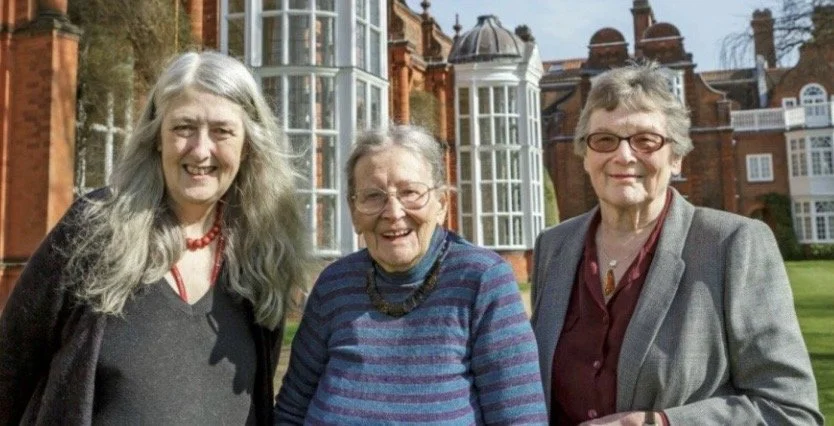
Mary Beard, Joyce Reynolds, and Pat Easterling at Newnham College, its three Classics fellows.
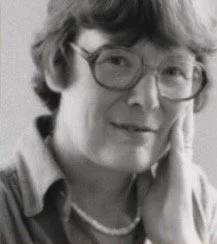
Pat Easterling
Pat Easterling